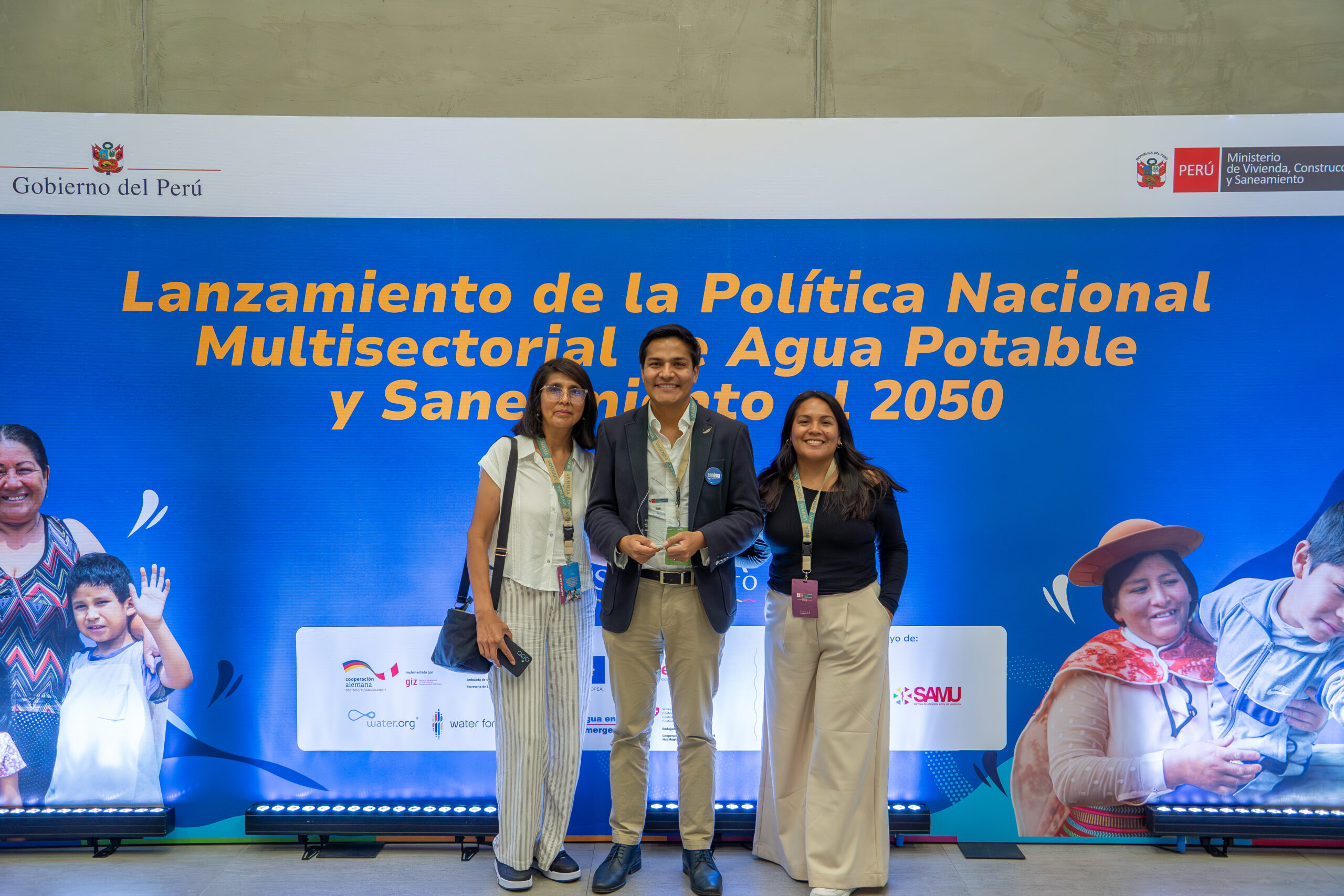
We were invited to participate as panelists in the launch of the National Multisectoral Policy for Water and Sanitation 2050, the main instrument that will guide the Peruvian State’s strategy in the sector over the next 25 years. In this context, Arturo Llaxacondor participated in a panel focused on the equity pillar of service access, sharing operational evidence on the implementation of sanitation solutions in off-grid urban contexts.
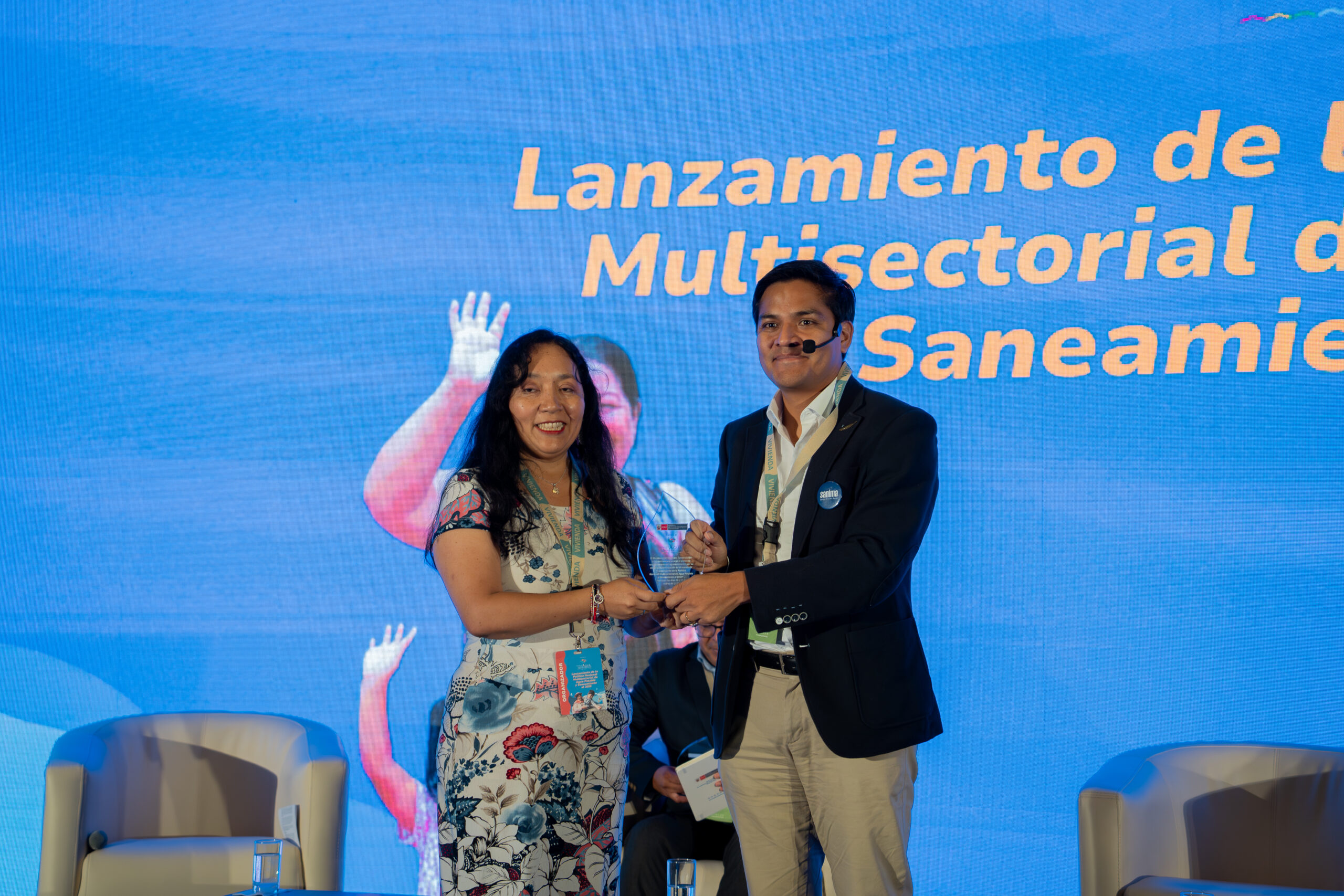
This policy, led by the Ministry of Housing, marks a turning point by shifting from a sectoral to a multisectoral approach, bringing together different government entities to improve sustainability, execution capacity, and overall impact.
The policy is built around a clearly defined public problem: limited access to safely managed water and sanitation services, which affects the majority of the population. Currently, around 62.5% of Peruvians lack access to safe water and 66.4% lack access to safely managed sanitation, highlighting the structural scale of the challenge.
Based on this diagnosis, six priority objectives have been established to address the root causes of the problem, ranging from improving the reliability of water sources and systems, territorial planning, and strengthening service providers, to promoting a stronger service culture among users. Among these, the objective of reducing inequity in access stands out, particularly in rural and peri-urban areas.
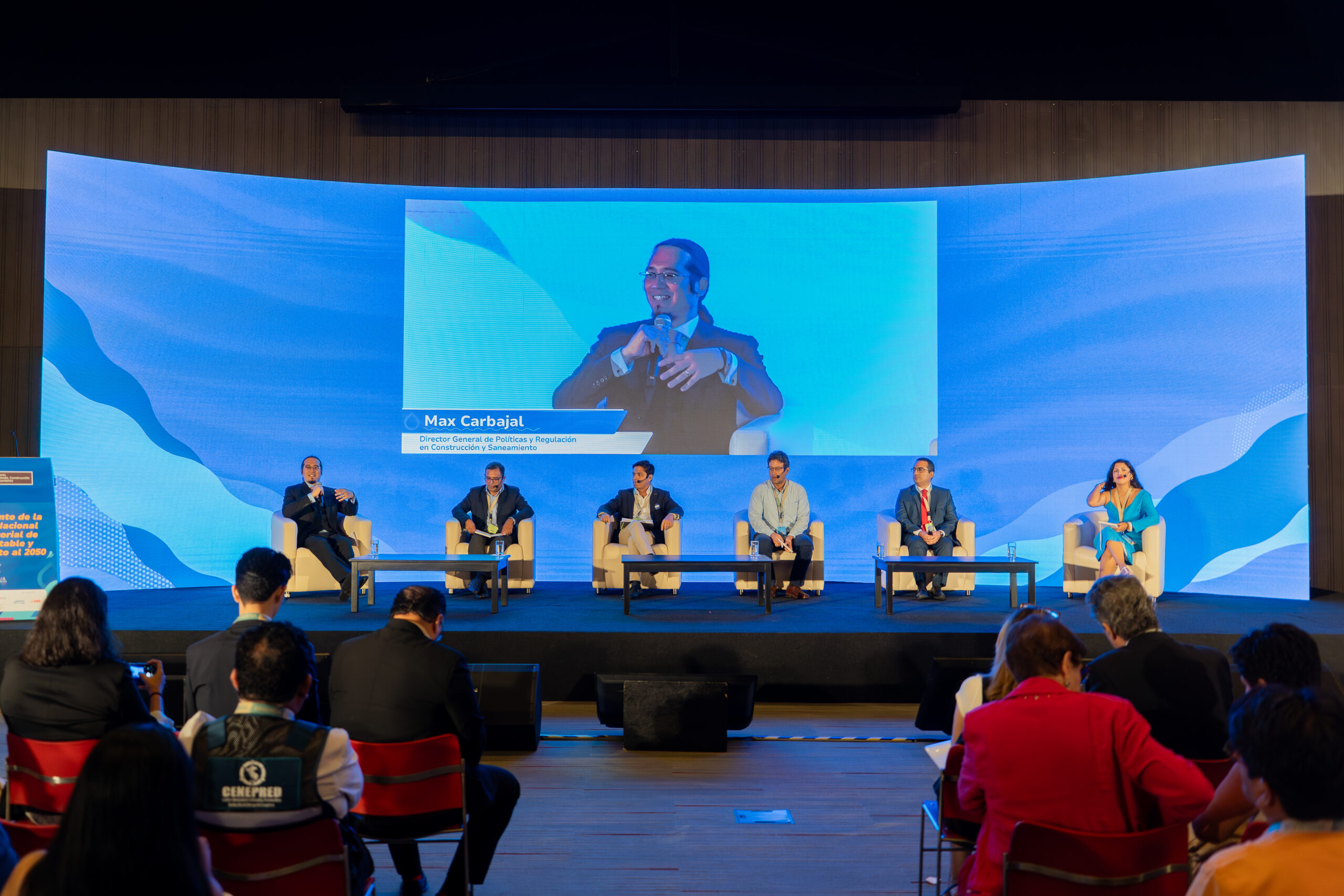
In this context, the panel discussion focused on a key question: how to close service gaps in the short term in territories where the expansion of conventional systems faces technical, economic, and time constraints.
The main message was that sanitation must be addressed from a service-oriented perspective, rather than solely through infrastructure. This implies ensuring conditions such as continuity, quality, traceability and proper excreta management across the entire service chain. In this regard, the container-based sanitation (CBS) model ensures the safe containment, collection, transport, and treatment of excreta under controlled conditions, directly contributing to policy objectives in contexts where other solutions are not viable.
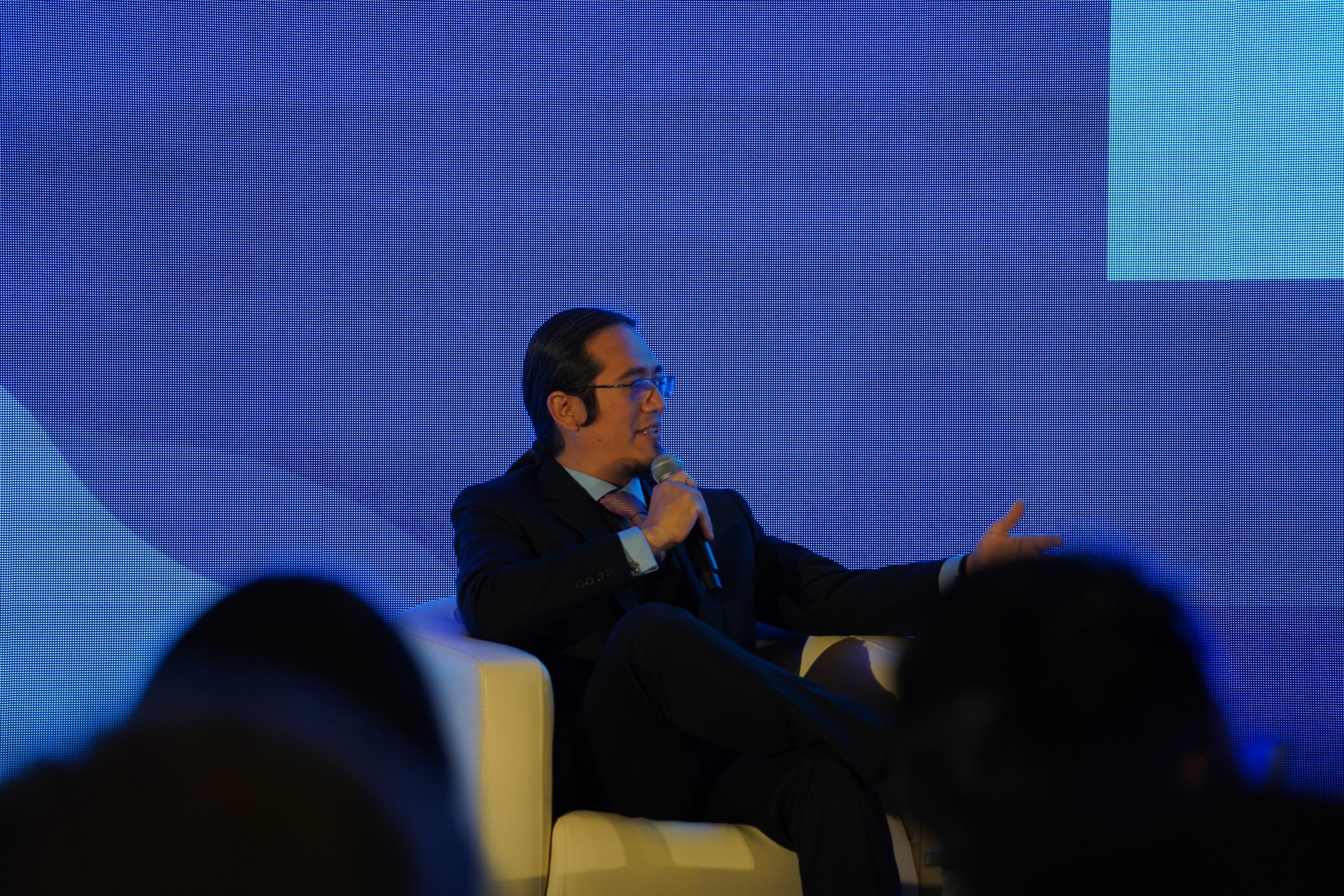
“Access to sanitation solutions in Peru remains a challenge, especially in contexts where traditional infrastructure is unable to reach.”
— Max Carbajal Navarro
Director General of Policies and Regulation in Construction and Sanitation
With more than 14 years of continuous implementation, Sanima operates in 250 peri-urban communities in Lima, providing access to safe sanitation for more than 16,500 people. This experience contributes concrete evidence to public policy spaces that are currently seeking to accelerate the closure of service gaps across the country.
Over the years, we have validated a model that not only responds to an urgent need, but does so with standards of safety, continuity and dignity for families. Our work demonstrates that effective solutions can be implemented in the short term, even in contexts where the expansion of traditional infrastructure is not feasible.
Today, this experience translates into key learnings for the sector: the need for flexible solutions, the importance of coordination among stakeholders, and the central role of placing people at the core of service design and implementation. We will continue working to ensure that access to dignified sanitation is no longer a matter of years-long waiting, but a reality that can be achieved today.